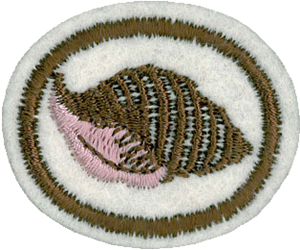
Learn the classification terms of mollusks, know the distinguishing characteristics of each, and become acquainted with several species under each class.
Distinguish between univalve and bivalve mollusks from the following considerations:
The shell
The mollusk body
Reproduction
Movements
Securing food
Self preservation
Identify from shells or drawings and know the following glossary of Concho logical terms:
Valve
Apex
Aperture
Byssus
Foot
Mantle
Operculum
Mother of pearl
Epidermis
Ribs
Teeth
Canal
Spines
Whorls
Lips
Concentric lines
Explain the development of a shell. How long do mollusks live?
Give some facts about the life of a strombus pugilis (fighting conch), and explain why this shell is so named.
Identify and explain the activities of the shipworm.
What accounts for the distribution of mollusks?
Name two mollusks that have no shells.
Find answers to the following interesting questions:
How are bivalve and univalve animals fastened to their shells?
How is shell color controlled?
What mollusk has four gills?
From what sea animal was India ink formerly made?
What mollusk spins a silken thread?
What shells were used for money by ancient tribes?
What shell is considered sacred by the Tibetans?
Purple dye of ancient times came from the secretion of what mollusk?
What is the source of pearls? How are they formed?
Name six commercial uses for shells.
Do one of the following:
Personally find and collect 40 species of shells representing the five classifications. List each shell as to place and date found, common name, scientific name, and class.
Make a collection of 50 species of shells you have found, received or purchased, representing the five classifications. List each shell collected as follows: if personally found, give information called for under (a) above; if received or purchased, give name of person from whom shell was received, habitat of shell, date of acquisition, common name, scientific name, and class.